
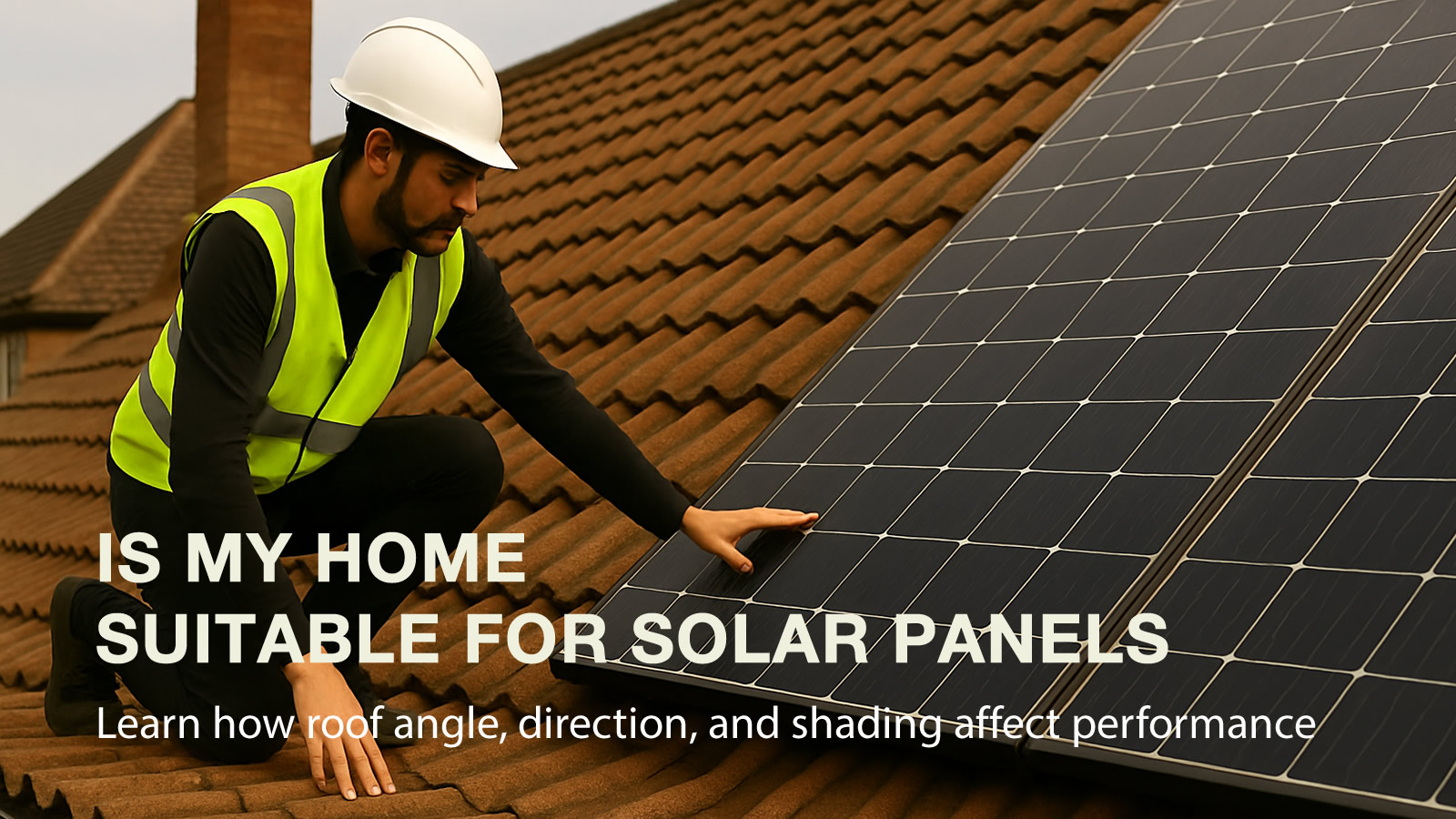
This guide helps you decide if your UK home is a good match for solar panels. We cover the key checks: roof direction and angle, shading risks, roof condition and space, electrical setup, and what a professional survey should include. By the end you will know the main green flags and red flags, how to handle common issues, and what to ask installers so you can compare quotes with confidence.
Orientation, tilt, location, and yield
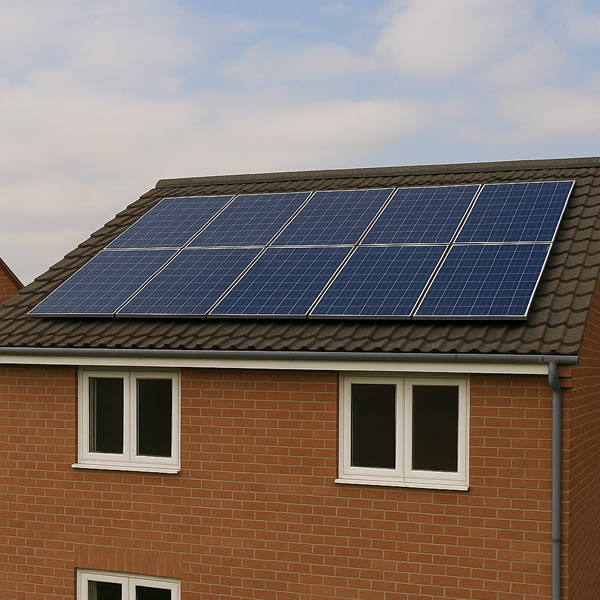
Orientation: In the UK, south facing roofs usually deliver the highest annual output. East and west can still perform very well, often producing a broader generation curve that covers more of the morning and late afternoon. North facing is lower yield but may still make sense if other roofs are shaded or space constrained.
Tilt: A roof pitch around 30 to 40 degrees is common and works well. Shallower or steeper roofs can still be viable; the impact on annual yield is usually modest. On flat roofs, ballasted frames can set an optimal tilt without roof penetrations, though rows need spacing to avoid self shading.
Location: Solar output varies by region but modern panels perform across the UK. Coastal, high latitude, or cloudier areas still generate useful energy. The biggest local factor is often shading, not weather. A simple rule of thumb is to focus first on avoiding shade and second on chasing tiny efficiency gains from tilt.
Expected yield: Installers estimate annual generation in kWh using your roof orientation, pitch, and postcode. A typical band for many UK homes is roughly 850 to 1,050 kWh per kWp per year, before any shading losses. The exact figure will be shown on your quote or performance estimate.
Roof condition, space, and mounting
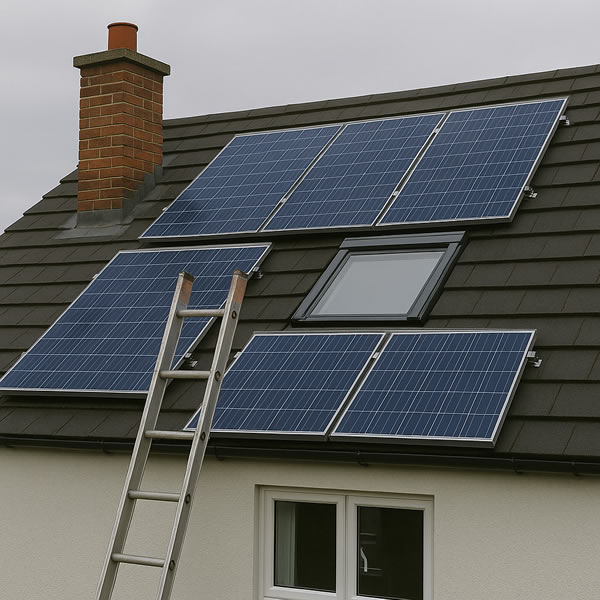
Condition: Panels last decades, so the roof beneath should be sound. If tiles are cracked, battens are rotten, or the covering is near end of life, fix that first. Replacing a tired roof shortly before solar is installed can save future scaffolding costs.
Space: Modern panels are often 1.7m by 1.1m (approx) and 370 to 450W each. A common domestic system uses 10 to 14 panels. Allow for safe clearances around ridges, hips, and roof edges, plus obstacle gaps for chimneys and skylights. On small or complex roofs, higher wattage panels can help fit more kWp in the same space.
Mounting: For pitched tiled roofs, installers use hooks that secure rails to rafters, with flashing to keep things watertight. For slate, specialist hooks and extra care are needed. On flat roofs, ballasted frames avoid penetrations but add weight; a structural check is recommended where loads are uncertain.
Bird proofing and coastal considerations: Mesh guards keep pigeons from nesting under panels. In coastal areas, choose corrosion resistant fixings and frames, and consider occasional rinsing to remove salt.
Shading and how to mitigate it
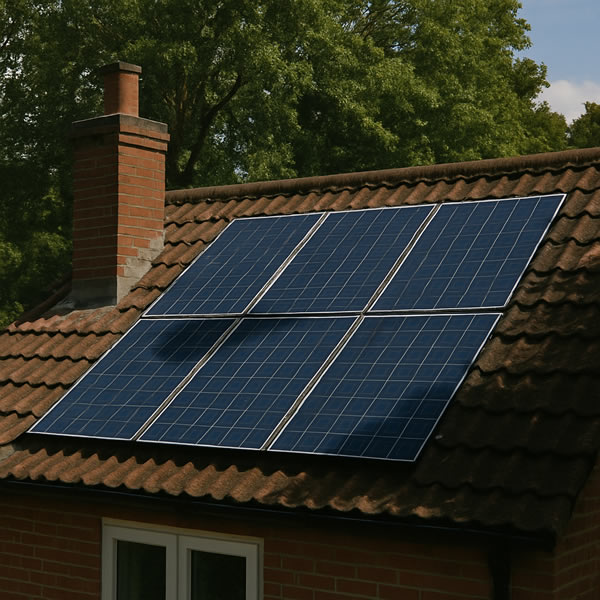
Shading is the most common performance killer. Sources include chimneys, trees, dormers, nearby buildings, and TV aerials. Shade moves across the roof during the day and across the seasons, so ask installers to model morning and afternoon patterns, not just noon in summer.
Mitigation options: If one roof face is shaded at key times, split the array across two faces (east and west) or move strings to the clearer area. Panel level power electronics (optimisers or microinverters) can limit the impact of partial shade by preventing one weak panel from dragging down a whole string. Pruning or removing problem branches may also help where appropriate.
Layout matters: Keep panels clear of chimney shadows at midday in winter where possible. Even small changes to array position can reduce annual shade losses significantly. Where shading is unavoidable, the yield estimate should include realistic losses, and the quote should list any panel level devices used to mitigate them.
Electrics, meters, and DNO approval
Consumer unit and earthing: Solar connects into your consumer unit via an inverter. An installer will check spare ways, RCD protection, and earthing. If your board is very old, an upgrade may be recommended for safety and compliance.
Metering: A smart meter makes it easier to record exported energy for SEG payments. If you do not have one, your energy supplier can usually arrange an upgrade. Some systems add a small generation meter and CT clamp for monitoring.
DNO notification or approval: Small systems may be installed and then notified to the Distribution Network Operator; larger or more complex systems may require approval before installation. Your installer should handle this paperwork as part of the job.
What to expect from a survey and quotes
A proper survey checks roof condition and structure, measures usable area, confirms cable routes to the consumer unit, and assesses shading with photos or software. The quote should show panel model and wattage, inverter type, any optimisers or microinverters, scaffolding scope, bird proofing, monitoring, warranties, and expected annual kWh with and without shading.
Compare like for like: Ask each installer to quote the same target kWp and list every component. If designs differ, request a short explanation (for example, higher wattage panels to fit more capacity, or optimisers due to partial shade). Make sure all DNO applications, commissioning documents, and handover packs are included in writing.
Realistic expectations and next steps
Output varies by season. Expect lower winter generation and strong spring and summer performance. Many homes see best value with 4.0 to 6.0 kWp arrays, using daytime power directly and exporting the rest for SEG payments. If evenings are your heavy use period, consider whether a battery could help later; it is often cheaper to install with the PV from day one, but AC coupled batteries can be added to existing systems too.
If you are broadly suitable on orientation, roof condition, and shading, the next step is to get two to three surveys and quotes. Ask for a simple payback estimate using your actual tariff, and request both panel only and panel plus battery options if you are curious about storage. Pick the design that balances yield, aesthetics, and budget without overcomplicating the install.
Further reading & useful guides
Independent resources on roof suitability, planning rules, and design basics.