
This guide gives a clear, beginner friendly view of UK solar panel costs and how to judge payback. You will learn the typical price ranges for common system sizes, what factors push a quote up or down, how the Smart Export Guarantee can add income, and how to run the payback sums without jargon. By the end, you will know how to compare quotes fairly and decide whether adding a battery makes financial sense for your home.
Headline points: most UK homes see best value with a 3.5 kW to 6 kW array, installed costs vary by roof and equipment quality, and savings depend on how much solar you use during the day vs how much you export. A battery can lift self consumption and savings, but only pays back well if it is sized sensibly and paired with the right tariff. Always compare like for like: panel count and wattage, inverter type, scaffolding, wiring, and all extras must be listed in writing.
Typical system costs in the UK
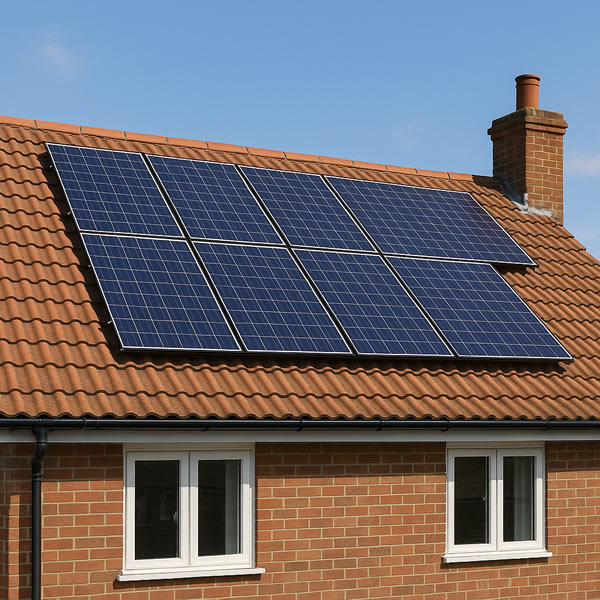
A typical UK solar quote is presented by system size (kWp) and panel count. While prices move with supply chains and demand, installers commonly quote along the following lines for straightforward, tiled roofs with good access and minimal shading:
Small systems (around 3.0 to 3.6 kWp, roughly 8 to 10 modern panels) are often priced in the lower band for full install. These suit smaller homes, bungalows, or properties with limited roof space. Medium systems (about 4.5 to 5.5 kWp, roughly 11 to 14 panels) are the most popular and balance output with cost. Larger domestic systems (6.0 to 7.5 kWp, roughly 15 to 18 panels) fit larger roofs or households with high electricity use, EV charging, or heat pumps.
Quotes should include scaffolding, DC and AC cabling, isolators, the inverter, generation meter if needed, commissioning, and paperwork for the Distribution Network Operator (DNO). Optional extras such as bird proofing, optimisers or microinverters, and monitoring gateways add cost but can be worth it on complex roofs or where performance data matters to you.
Remember that UK VAT on domestic solar has been set at a favorable rate in recent years, and many quotes already reflect that in the final price. Confirm the VAT treatment in writing and check what happens if you add a battery at the same time vs later. Bundled installs can be more cost effective than adding a battery in a separate visit.
If your roof is slate, very high, or needs remedial work (rotten battens, difficult access, asbestos), prepare for higher labor and scaffolding. Conversely, simple two story tiled roofs with driveway access and no shading are the easiest and cheapest to install.
What drives price: kit, roof, and labor
Panel wattage and brand: Higher efficiency panels cost more but let you fit more capacity on a small roof. If you have plenty of space, you can often get similar output for less by using slightly lower wattage modules. Premium black frame or all black panels add to curb appeal and price. Budget panels reduce cost but may carry shorter or less robust warranties.
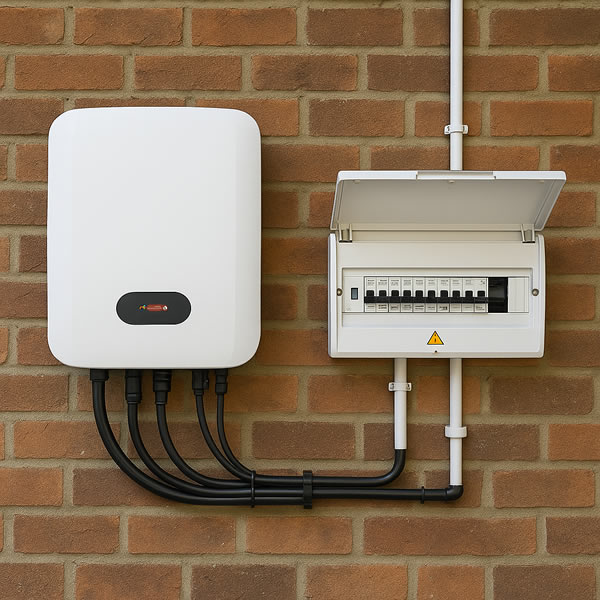
Inverter choice: A single string inverter is the lowest cost option and suits unshaded, simple arrays. Power optimisers plus a string inverter improve panel level control at a mid range price. Microinverters cost more but add panel level conversion and monitoring, and can help with complex roofs or partial shading. Warranty length and ease of replacement matter: an inverter is the one major component you may replace once during the system lifetime.
Roof type and complexity: Tiled roofs are usually straightforward. Natural slate, flat roofs with ballasted frames, or ornate roofs need more labor and care. Chimneys, valleys, and skylights increase time on site and require careful layout and extra rails and fixings. Long cable runs from roof to consumer unit also add labor and materials.
Scaffolding and access: Quotes vary widely based on access. A simple front elevation scaffold is cheaper than full wrap scaffolding on a three story townhouse. Narrow streets, no parking, or shared access will add time and cost. Ask the installer to itemize scaffolding so you can compare quotes directly.
Paperwork and protections: Ensure your quote includes DNO application, commissioning documentation, and product warranties in writing. Confirm the workmanship warranty period and whether the installer is accredited under MCS or equivalent schemes required by many SEG export tariffs.
Pro tip: When comparing quotes, create a simple line by line checklist: kWp, panel make and model, inverter type, optimisers or microinverters, scaffolding scope, bird mesh, monitoring, warranties, and all included remedial works. If something is not written down, assume it is not included.
Battery economics: when it pays
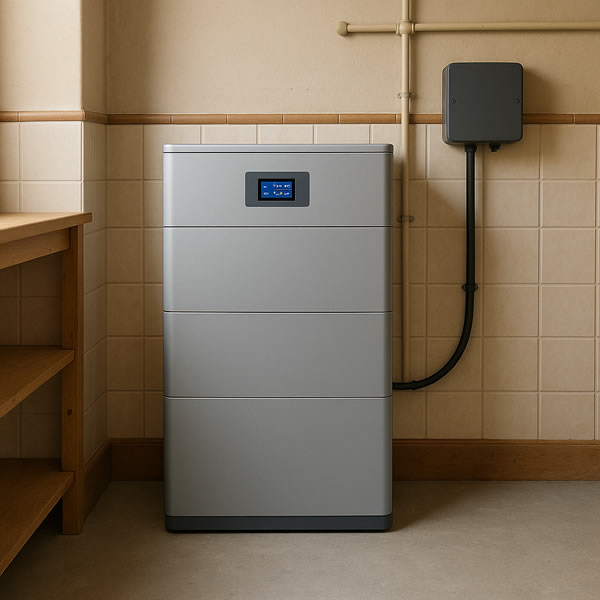
A battery stores surplus solar so you can use more of your own energy in the evening. It can also take advantage of cheap off peak tariffs in winter. Whether a battery pays back depends on your usage pattern, tariff, and battery price per kWh of capacity.
Sizing: Many homes pair a 4.5 to 5.5 kWp array with an 8 to 10 kWh battery. Smaller households may be fine with 5 to 7 kWh. Large families with EVs or heat pumps may look at 12 to 15 kWh. Oversizing a battery can stretch payback, while undersizing can leave savings on the table. Aim to cover your typical evening and early morning demand without leaving the battery half empty most of the year.
Tariffs: With a smart time of use tariff, you may charge the battery at a cheap night rate during darker months and discharge during peak periods. This spreads savings beyond sunny days and shortens payback. Without a smart tariff, battery economics rely mainly on increasing self consumption and avoiding peak unit rates.
Warranties and round trip efficiency: Batteries lose a little energy during charge and discharge, so check the round trip efficiency figure and cycle warranty. Many systems warrant a certain usable capacity after, for example, 6,000 cycles or 10 years. Include these details in your decision and in your payback model.
Backup power: Some systems can power essential circuits during outages with extra hardware. This adds cost but can be valuable if you rely on medical devices, home working, or security systems. If you want backup, specify it at quote stage so the installer designs a compliant backup circuit.
Bills, tariffs, and export income
Your savings come from two places: using your own solar instead of buying from the grid, and being paid for any exported surplus. The first part depends on daytime usage. Running washing, drying, and dishwashing cycles when the sun is out increases the share of solar used on site. Smart plugs and timers help here. The second part depends on your SEG export tariff. Some suppliers offer fixed export rates, others offer variable or time of day rates. Compare both your import and export tariffs for the full picture.
If you add a battery, you will export less and use more on site. That increases import savings and may reduce export income. The net effect is usually positive if the battery is sensibly sized and priced. Keep an eye on tariff changes each year and be ready to switch supplier to maintain good import and export rates.
Payback math and worked examples
To estimate payback, use this simple framework:
1) Annual generation: Multiply system size (kWp) by a kWh per kWp estimate for your location and roof. Many UK homes use a ballpark of 850 to 1,050 kWh per kWp per year depending on orientation and shading.
2) Self consumption rate: Estimate what share you will use directly in the home (without a battery many homes see 30 to 50 percent; with a battery this can rise to 60 to 85 percent).
3) Import rate avoided: Multiply self used kWh by your import unit rate to estimate bill savings.
4) Export income: Multiply exported kWh by your SEG rate.
5) Total annual benefit: Add import savings and export income.
6) Payback: Divide total installed cost by annual benefit. This gives a simple payback in years. For a more complete view, include maintenance, inverter replacement after 10 to 15 years, and tariff changes.
Example A, panel only: A 4.5 kWp array generating 4,000 kWh per year. Suppose you self use 40 percent (1,600 kWh) at an import rate of, for example, 0.28 per kWh, giving about 448 per year in avoided import. The remaining 2,400 kWh exported at, say, 0.12 yields about 288. Total benefit around 736 per year. If installed cost were, for illustration, 6,500, simple payback would be about 8.8 years. Your actual numbers will vary with roof, usage, and tariffs.
Example B, with battery: The same 4.5 kWp array plus a 9 kWh battery lifts self use to, say, 70 percent (2,800 kWh). Avoided import becomes about 784 at the same unit rate. Exports fall to 1,200 kWh, giving about 144 at the same export rate. Total benefit around 928. If the combined system cost were, for illustration, 10,500, simple payback would be about 11.3 years. On a smart tariff that lets you charge cheaply in winter, benefit can rise further and shorten payback.
These examples are not quotes. They show the method so you can drop in your own tariff, usage, roof, and quote details. The key is to model your real daytime demand and consider how much flexible load you can shift to sunny hours. If you work from home or run heat pump hot water boosts at midday, self use will be higher and payback faster.
How to compare quotes and next steps
Ask for at least three quotes that list the exact panel model and wattage, inverter type, any optimisers or microinverters, scaffolding scope, bird protection, monitoring, warranties, and DNO paperwork. Confirm whether roof fixes or consumer unit upgrades are included. Check lead times and how long prices are valid. If you want a battery, request versions with and without, plus a tariff based payback view for each.
Pick an installer with strong reviews, clear documentation, and responsive aftercare. A well designed, well installed 4.5 to 6.0 kWp system on a suitable UK roof can deliver solid savings and a reasonable payback. A sensibly sized battery can add convenience and resilience while improving self consumption, especially when paired with a good time of use tariff. With a fair quote and realistic expectations, you can make an informed decision and avoid surprises.
Further reading & useful guides
Here are more guides and trusted resources related to this topic.